
Napa Cabbage Kimchi
Cook modeWhole-head napa cabbage kimchi — the foundation of Korean cooking.
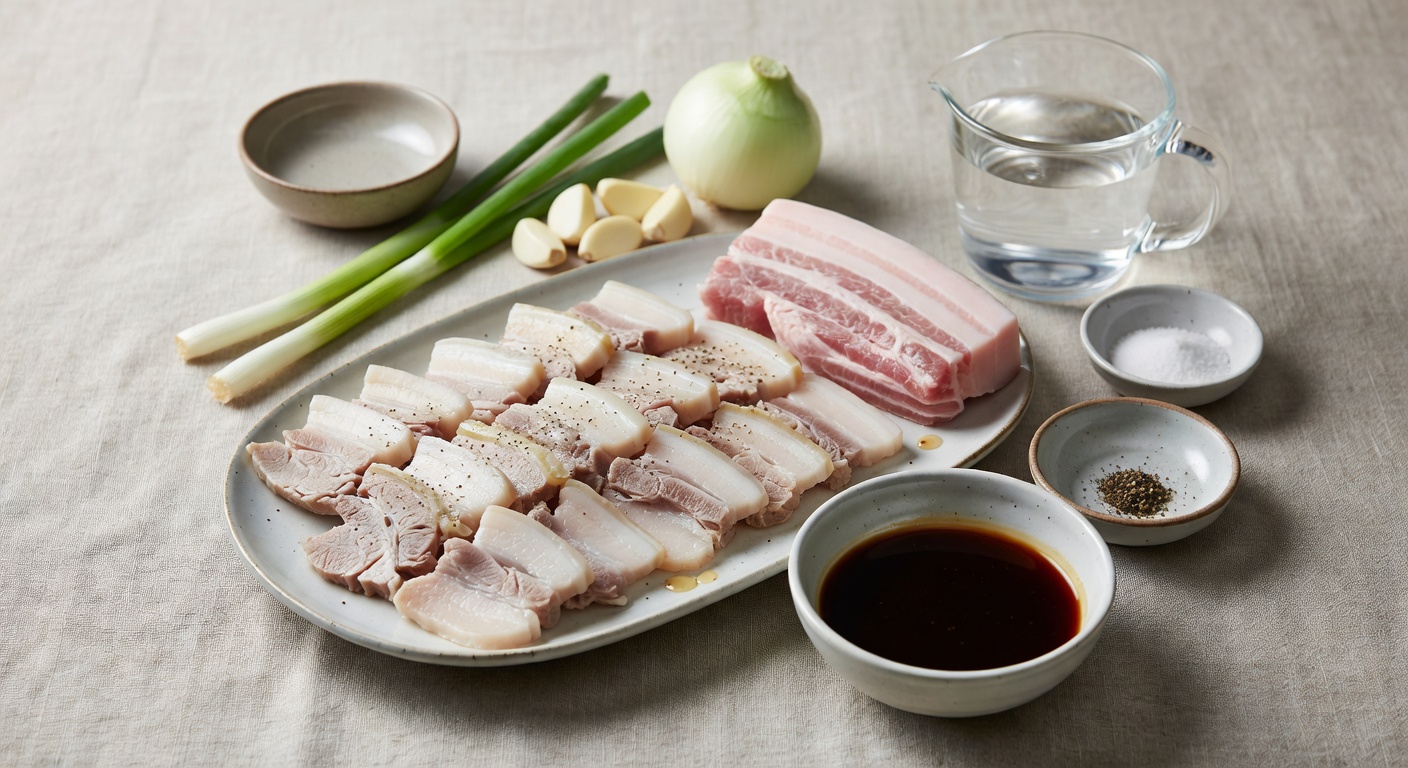
History & culture
Napa cabbage kimchi (baechu kimchi) became Korea's iconic ferment after chili spread in the Joseon era, though earlier salted cabbages likely existed. Winter kimjang gatherings stock households with jars that mature over months, shaping community labor and taste memory. UNESCO recognition of kimjang underscores its role in culture, and the style is now synonymous with Korean food worldwide.
KCook
Ingredients & steps
Ingredients
- 8 cloves, mincedGarlic
- 4 cups, for brineWater
- 4 stalks, choppedGreen onion
Substitutescallion or spring onion
- 200 g, matchsticksKorean radish (mu)
Substitutedaikon radish
- 2 heads, about 3 kgNapa cabbage
SubstituteChinese cabbage
Seasonings
- 1 cupKorean chili flakes (gochugaru)
Substitutecoarse red pepper flakes (adjust heat)
- 2 tbspSugarOptional
- 1/2 cup, for saltingSalt
- 1/3 cupFish sauce (aekjeot)
Substitutesoy sauce + anchovy (approximate)
Steps
- 1120 min
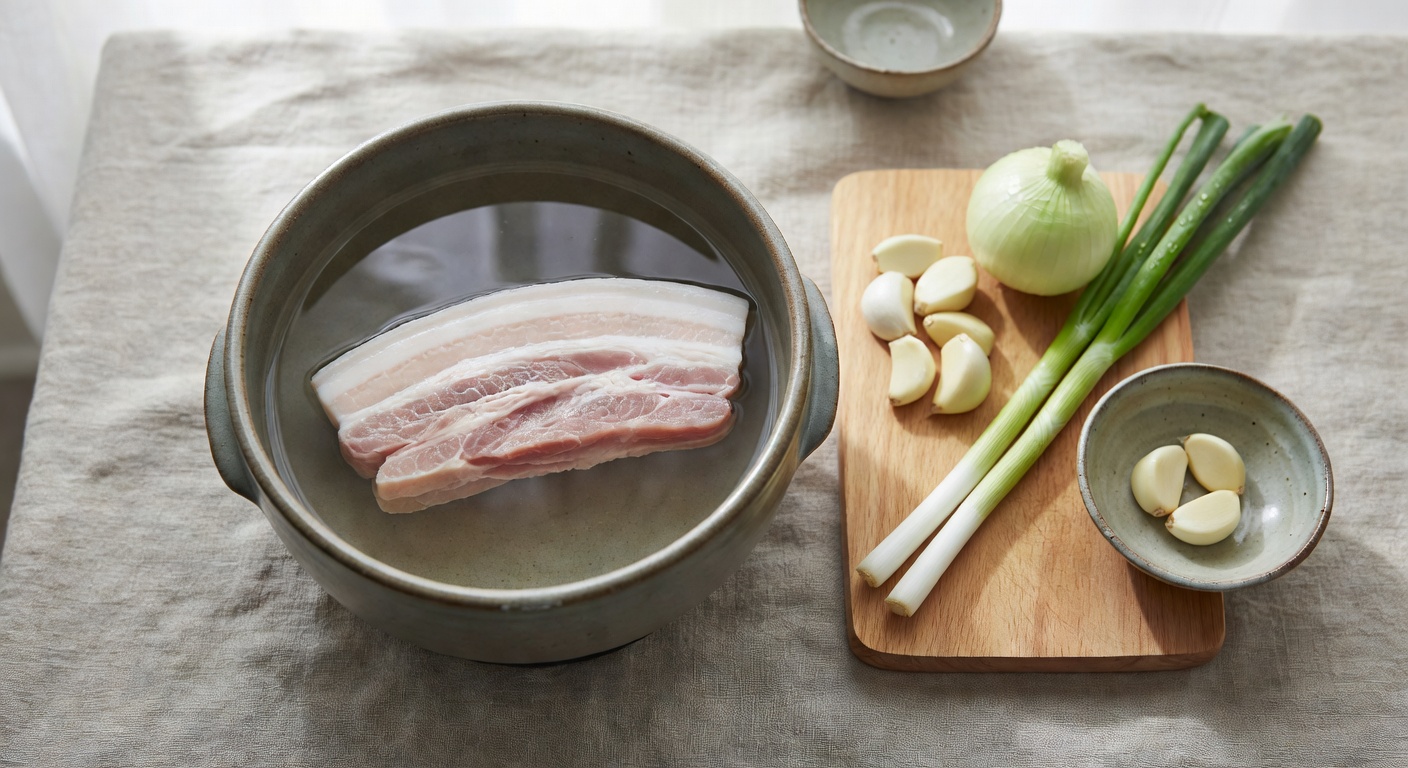
Quarter napa cabbage lengthwise. Dissolve salt in water, salt between leaves with the brine, and rest 2 hours until wilted. Rinse and drain very well.
- Napa cabbage
- Salt
- Water
- 25 min
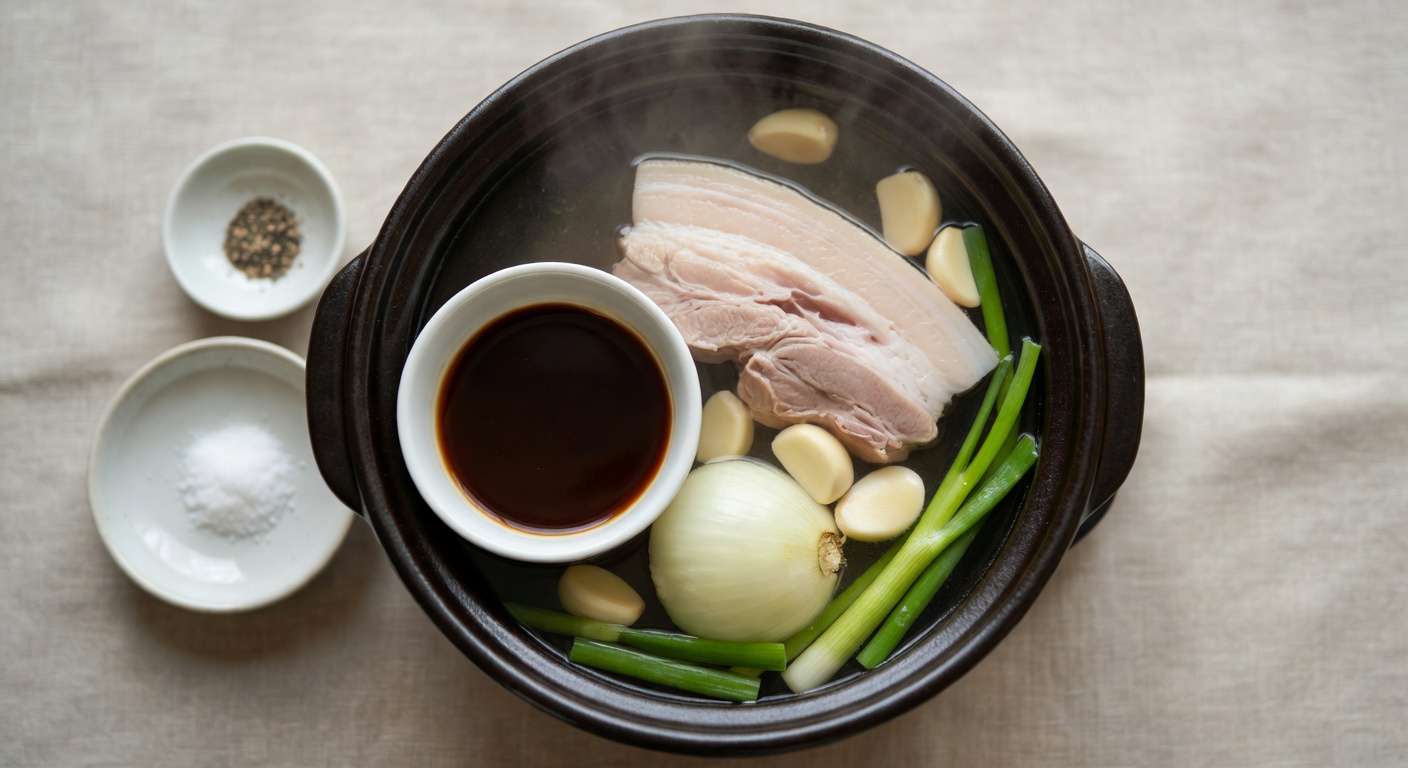
Mix gochugaru, fish sauce, garlic, sugar, radish and green onion into kimchi paste.
- Korean chili flakes (gochugaru)
- Fish sauce (aekjeot)
- Garlic
- Sugar
- Korean radish (mu)
- Green onion
- 315 min
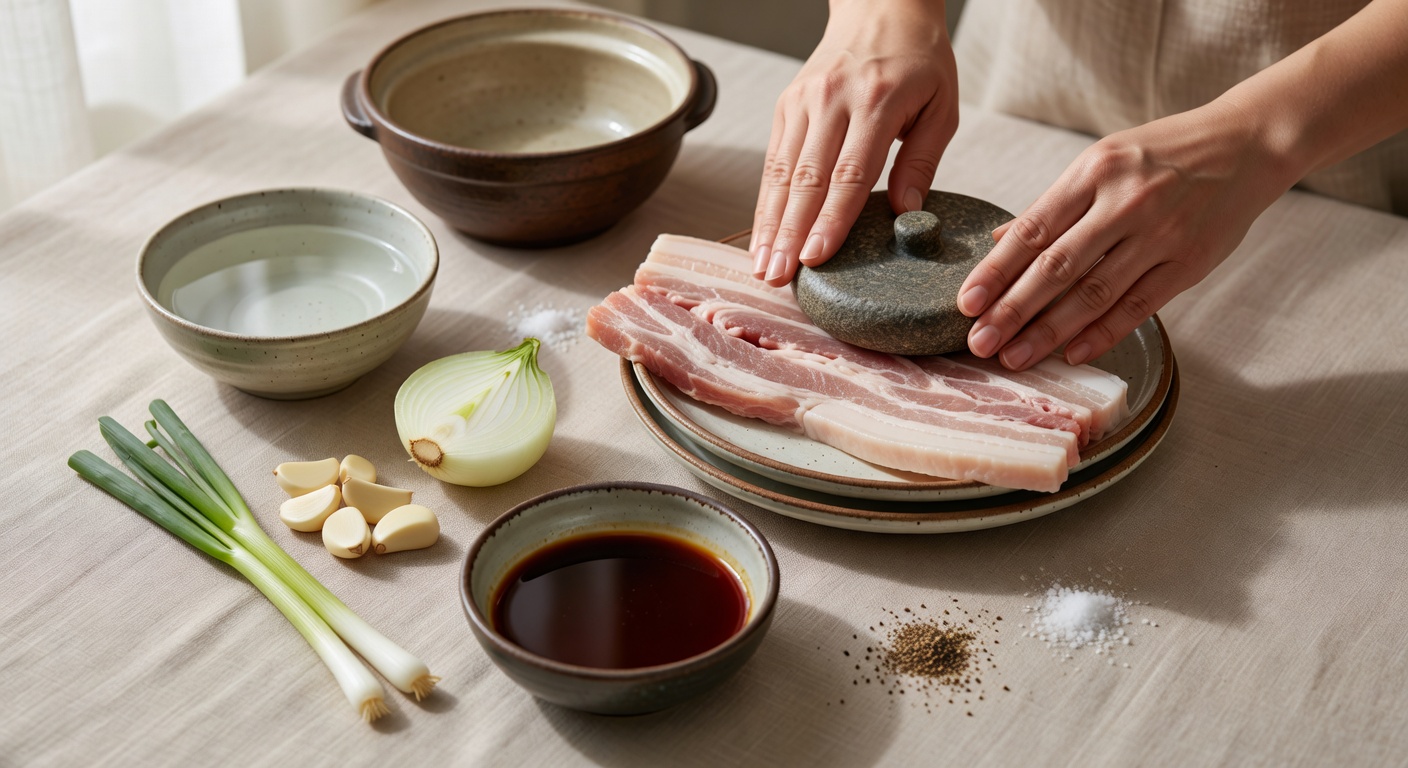
Spread paste between every leaf of each cabbage quarter. Pack tightly into a container.
- Napa cabbage
- 42880 min
Ferment at room temperature 1–2 days, then refrigerate. Ready in about 1 week.
- Napa cabbage
Storage & reheating
Refrigerate after initial ferment. Keeps months; flavor sharpens as it ages.
Troubleshooting
⚠️ Kimchi too salty
→ Rinse salted cabbage more thoroughly; reduce fish sauce next batch.
⚠️ Not fermenting
→ Leave at room temperature 1 more day; ensure cabbage was not over-rinsed.