
Banquet Noodles
Cook modeThin wheat noodles in warm anchovy broth with simple toppings.
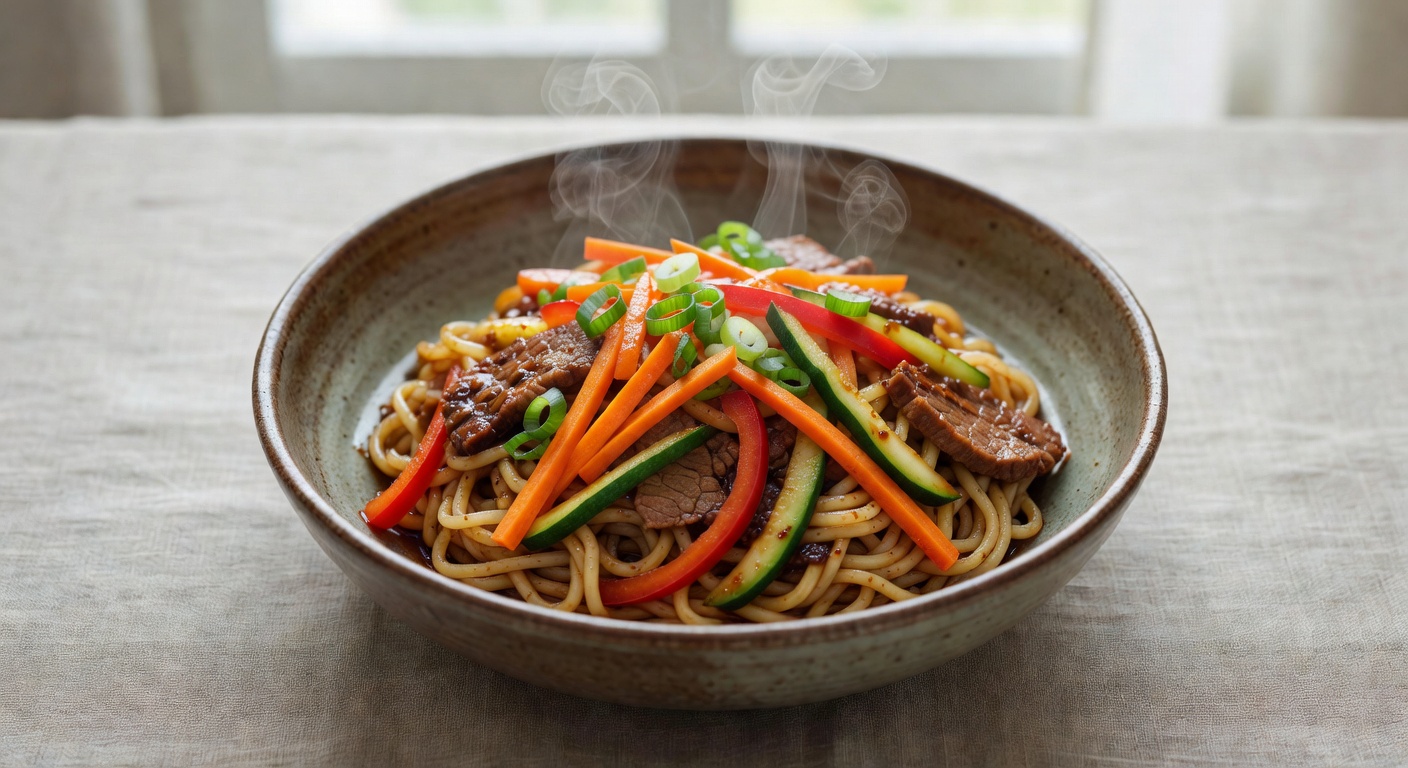
History & culture
Banquet noodles are often linked to weddings, first birthdays, and holidays where long, thin wheat noodles symbolize longevity in Korean custom. Tradition holds that serving a light broth with noodles honored guests without the heaviness of meat feasts alone. Regional variations use anchovy, beef, or vegetable broths depending on home and temple food contexts. Janchi guksu remains widely cited in festive and community celebration meals.
KCook
Ingredients & steps
Ingredients
- 1/2 medium, juliennedZucchini
- 6 cupsWater
- 20 g, for brothDried anchovies (for broth)
Substitutedashi powder (1 tsp per cup water)
- 1 beatenEgg
- 2 stalksGreen onion
Substitutescallion or spring onion
- 300 g, thin somyeonKorean wheat noodles (somyun/guksu)
Substitutethin spaghetti or somen
Seasonings
- 2 tbspSoy sauce
SubstituteTsuyu (diluted) 4 tsp (2 tsp per 1 tbsp) or Tamari 2 tbsp
- 1 tspToasted sesame oil
Substitutea small amount of olive oil (flavor differs)
- 1 tspSalt
Steps
- 1Medium heat15 min
Simmer dried anchovy in water 15 minutes to make a clear broth. Strain.
- Dried anchovies (for broth)
- Water
- 2Medium heat4 min
Season broth with soy sauce and salt. Blanch zucchini briefly, then cook the beaten egg into a thin omelette and slice into ribbons.
- Soy sauce
- Salt
- Zucchini
- Egg
- 3High heat4 min
Cook wheat noodles in boiling water 3–4 minutes. Rinse briefly in cold water.
- Korean wheat noodles (somyun/guksu)
- Water
- 4
Serve noodles in warm broth topped with zucchini, egg ribbon and green onion. Drizzle sesame oil.
- Korean wheat noodles (somyun/guksu)
- Zucchini
- Egg
- Green onion
- Toasted sesame oil
Storage & reheating
Broth and noodles store separately up to 2 days. Reheat broth; refresh noodles in hot water.
Troubleshooting
⚠️ Broth tastes flat
→ Simmer anchovy longer; add 1 tbsp soy sauce and pinch of salt.
⚠️ Noodles mushy
→ Do not overcook; rinse lightly so they stay springy in hot broth.